
UK Greyhound Betting Guide: Results, Tips & Strategy
 Available in US
Everything UK punters need to know about betting on the dogs, from reading form to finding value.
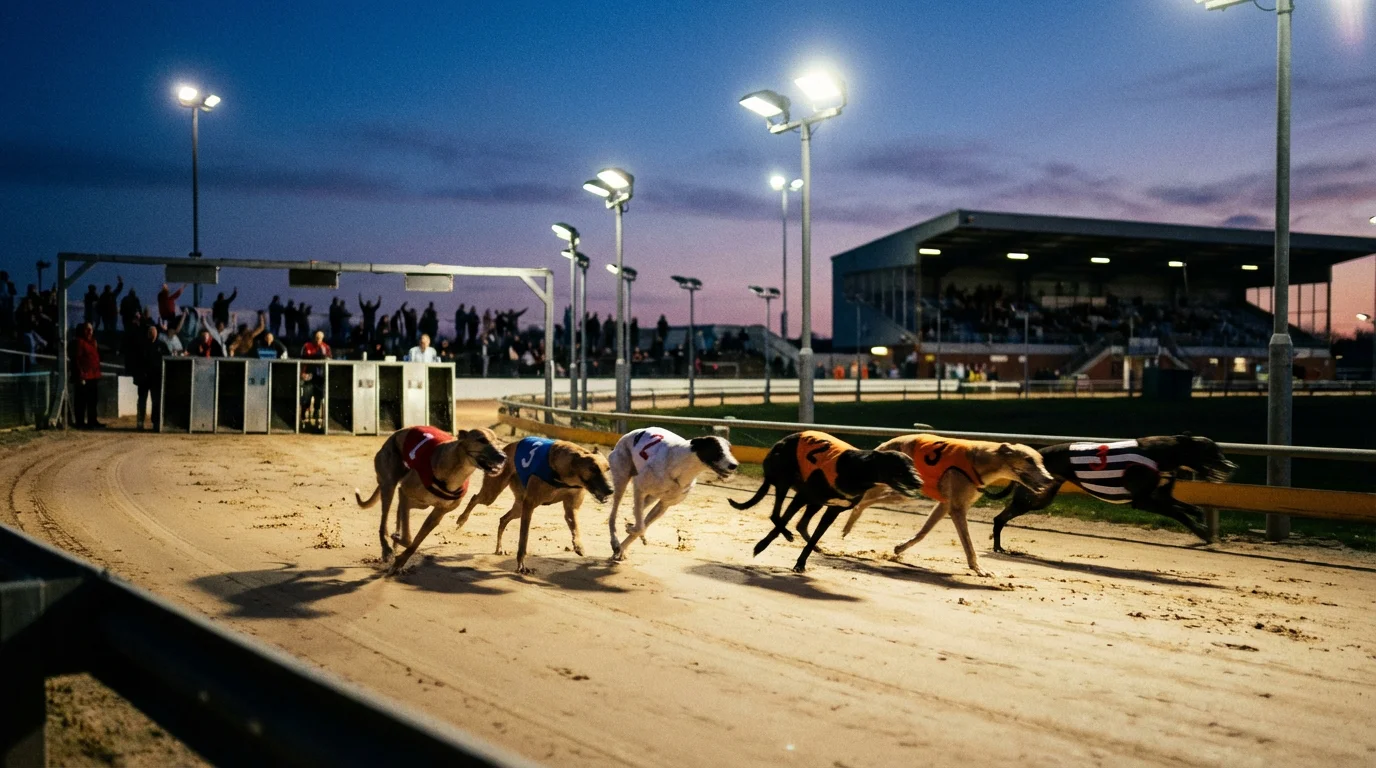
Why Greyhound Betting Plays by Different Rules
Six dogs, no jockey, thirty seconds flat. Greyhound racing strips betting down to raw mechanics in a way that no other sport quite manages. There is no rider making tactical decisions mid-race, no stewards' inquiry over interference by a human on board, and no drawn-out three-minute affair where momentum shifts twice before the final furlong. The traps open, the lure moves, and within half a minute the result is settled. That compression changes everything about how a punter should think.
Horse racing punters who drift into greyhound betting often make the same mistake: they apply the same logic to a fundamentally different contest. In a six-dog field, the favourite's implied probability is far higher than in a twelve-runner handicap. Trap position matters more than post position ever does on the flat. And form cycles are shorter — a greyhound racing twice a week generates data at a pace that makes horse racing look glacial. If you treat the dogs like slower horses in smaller fields, you will lose money steadily and wonder why.
This guide is built for punters who want to understand greyhound betting properly, whether that means reading a race card for the first time or refining a strategy that has been leaking value. It covers the mechanics of a race, the full range of bet types available at UK tracks, how to read form, and how to build a repeatable approach to finding value in a sport where the margins are tight and the turnaround is fast.
Key fact
UK greyhound racing is regulated by the Greyhound Board of Great Britain. All licensed meetings feature six-dog fields, run under strict welfare and integrity rules. There is no jockey variable — the outcome is determined entirely by the dogs, the trap draw, and the track conditions.
The structure of greyhound racing — short races, small fields, high frequency — creates opportunities that other sports do not. It also creates traps for the undisciplined. The sections that follow are designed to give you the knowledge to tell the difference.
Anatomy of a UK Greyhound Race
Before a single pound changes hands, understand what actually happens between trap rise and the finish line. A greyhound race at any licensed UK track follows the same basic structure. Six dogs are loaded into numbered traps — metal starting boxes arranged side by side at one end of the track. An artificial lure, typically a stuffed hare mounted on a motorised rail, begins its circuit. When the lure passes the traps, the lids spring open and the dogs give chase.
The entire sequence, from trap rise to the dogs crossing the finish, usually lasts between 28 and 45 seconds depending on the distance. Sprint races over 210 to 285 metres are pure explosions of early pace — often decided before the first bend. Middle-distance races at 380 to 515 metres are the standard fare at most UK tracks, offering enough ground for both fast starters and strong finishers to make their case. Stayers races at 600 metres or more are rarer and tactically different, rewarding dogs with stamina and the willingness to race through traffic.
UK tracks come in two basic shapes. Some are two-bend circuits — a simpler oval that rewards early pace and clean rail-running. Others are four-bend tracks with tighter, more demanding corners that test a dog's ability to negotiate crowding and maintain position through multiple turns. Track size varies too. A big, galloping track like Nottingham races differently from a tight, sharp circuit like Crayford. This is not trivia — it is the first variable that separates informed betting from guesswork.
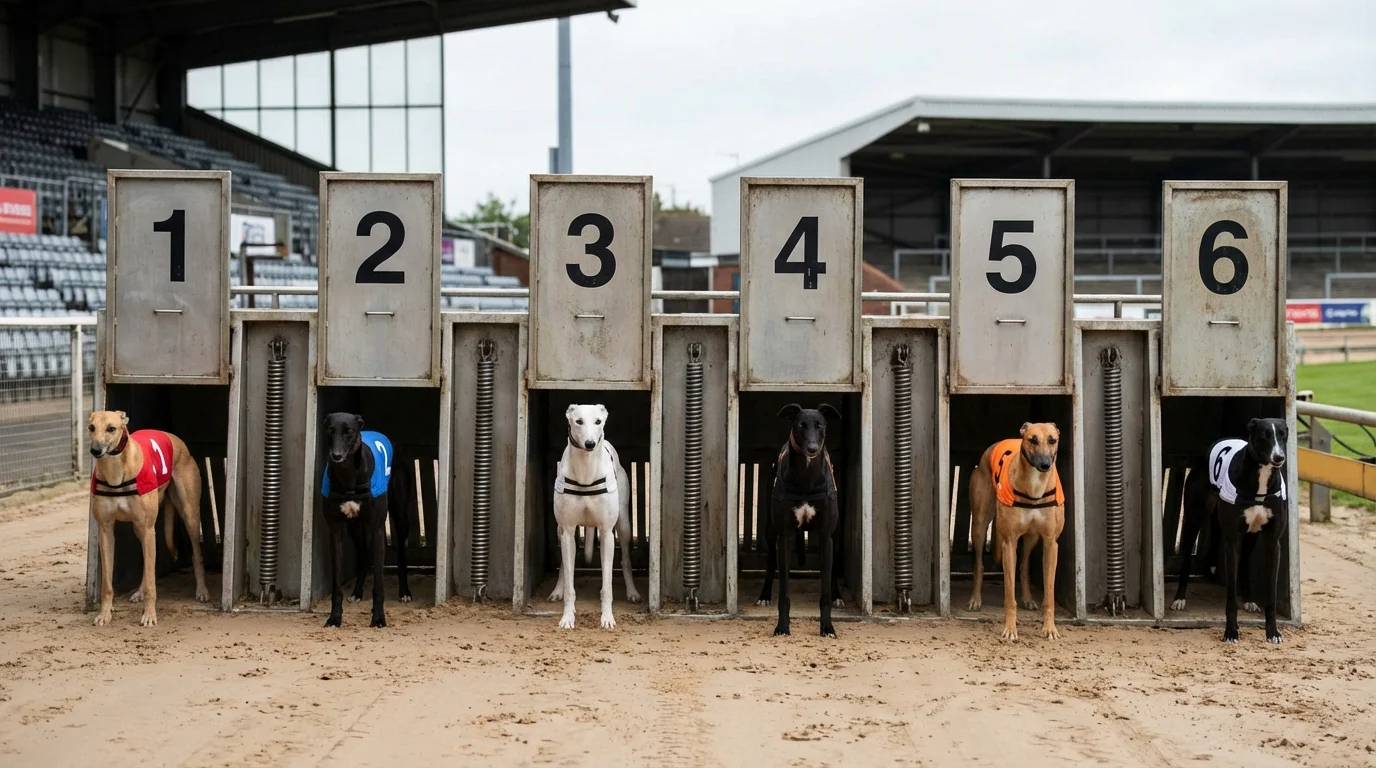
Sprint
210–285m. Trap speed dominant. Decided early.
Middle distance
380–515m. The standard. Form most reliable here.
Stayer
600m+. Stamina and tactical running. Pack dynamics matter.
Every race in the UK is limited to a maximum of six runners. Previously, eight-dog fields existed at certain tracks, but these have been phased out on welfare and safety grounds. When a dog becomes a non-runner due to injury or illness, a reserve may be substituted. Reserve dogs are marked with an "R" on the racecard and wear an additional identifier on their racing blanket. Not all races carry a reserve, and the substitution does not always happen — so the field you see at declaration may not be the field that runs.
What Do Greyhound Trap Colours Mean?
Each trap number corresponds to a specific blanket colour worn by the dog during the race. This is not decorative — it is how you identify your selection at speed. Trap 1 wears red, Trap 2 blue, Trap 3 white, Trap 4 black, Trap 5 orange, and Trap 6 wears black and white stripes. The colour system is universal across all GBGB-licensed tracks. If a reserve dog enters the field, it wears the blanket of the trap it occupies, plus an "R" marker.
Trap numbers carry strategic weight. Low-numbered traps sit closest to the inside rail. Dogs drawn in Traps 1 and 2 have an immediate positional advantage if they are natural railers — dogs that prefer to hug the inside of the track. High-numbered traps, particularly 5 and 6, suit wide runners that prefer room on the outside. A dog drawn on the "wrong" side of the track relative to its preferred running style faces an immediate disadvantage, and this is reflected — sometimes insufficiently — in the betting market.
How the UK Grading System Shapes Every Race
Greyhound racing in the UK operates a grading system that slots dogs into categories based on their ability. The grades run from A1 at the top to A10 or A11 at the bottom depending on the track, with each grade representing a band of performance. A dog winning consistently at its current grade will be moved up; a dog failing to compete will be dropped down. The system ensures that races are broadly competitive — a top-class A1 dog does not face a struggling A7 animal in graded racing.
Open races sit outside the grading structure. These are invitation-only events or competitions that attract the best dogs regardless of their graded status. The English Greyhound Derby, the sport's most prestigious event, is an open race. As of 2026, the GBGB oversees eighteen licensed stadiums across the country, each hosting a mix of graded and open events throughout the season. Betting markets on open races tend to be deeper, with more liquidity and sharper odds, because they draw the widest attention from both punters and bookmakers. For graded racing — which forms the vast majority of the weekly calendar — understanding a dog's grade history tells you whether it is improving, declining, or being carefully placed by a trainer who knows exactly what level it can handle.
How to Read Greyhound Form Like a Professional
Form is the closest thing to a cheat sheet the dogs will ever give you — but only if you know what to look for. A greyhound race card compresses an enormous amount of information into a few columns, and the gap between a casual glance and a proper read is often the gap between losing and breaking even.
Every race card lists each dog with its trap number, name, trainer, weight, recent form figures, and race comments. The form figures are a sequence of numbers representing finishing positions in recent runs, read from left to right with the most recent run on the right. A form line of 3 2 1 1 tells you a dog has been improving and won its last two starts. A line of 1 1 4 6 tells you something went wrong. The numbers alone are not enough — the context behind each run is where the real information lives.
Race comments use standardised abbreviations to describe what happened during a run. SAw means slow away from the traps. Bmp means the dog was bumped. Ck means it was checked — forced to slow by traffic. W means it ran wide. Crd means crowded. Led means it led the field. These abbreviations are the language of greyhound form, and ignoring them is like reading a financial statement while skipping the footnotes. A dog that finished fourth but was recorded as "Bmp1, Ck2" — bumped at the first bend and checked at the second — was likely better than the bare finishing position suggests. A dog that led and faded tells a different story to one that was interfered with throughout.
Weight is listed in kilograms and typically fluctuates by small amounts between runs. A sharp weight drop might indicate a dog that is not eating well or has had health issues. A steady weight close to the dog's usual racing mark is neutral. Weight becomes more significant in staying races where the physical demands are greater, and in wet conditions where heavier dogs sometimes handle softer going more effectively.
Recent Run Data
Form figures (finishing positions), race comments, distance beaten. Shows current trajectory — improving, declining, or consistent.
Times and Splits
Actual race time, calculated time, sectional splits. Reveals early pace, finishing speed, and whether the overall time was genuine or flattered by a fast track.
Trap History
Previous trap draws and performance from each position. Exposes whether the dog is suited to tonight's draw or compromised by it.
Trainer Stats
Trainer strike rate at this track, recent kennel form, patterns of placement. The handler's intent often shows in the data before it shows in the race.
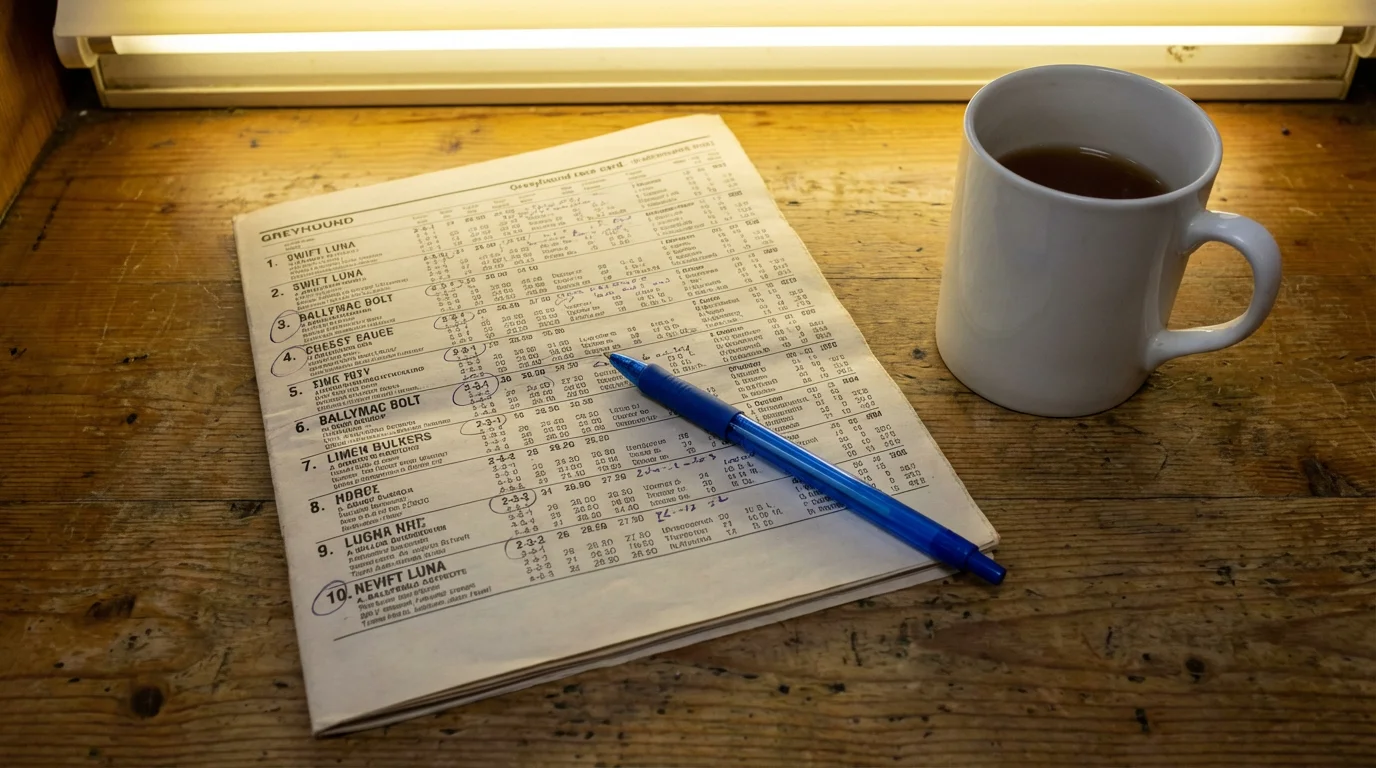
Greyhound Sectional Times and What They Reveal
The overall winning time tells you who crossed the line first and roughly how fast the race was run. Sectional times tell you why. A sectional split divides the race into segments — typically the run to the first bend and the run from the last bend to the finish — and measures each separately. This is where you find dogs that are faster than their final positions suggest.
A dog with a strong early sectional but a weak run-in is one that gets to the front and fades — useful in sprint races but a liability over middle distances. A dog with a slow early split but a fast finishing sectional is one that gets going late. In crowded races full of interference, a strong finisher can be buried in fifth or sixth despite running a faster closing section than the winner. Sectional data lets you see through the noise of race-day trouble.
Comparing sectionals across different tracks requires adjustment. A 16.5-second first split at Romford and a 16.5-second first split at Nottingham do not mean the same thing — the track circumference, distance to the first bend, and bend radius all differ. The meaningful comparison is always relative to the track standard for that specific distance and circuit. Most form services calculate an adjusted time that accounts for these differences.
The Trainer Factor: Kennel Form and Strike Rates
The trainer is the one variable that connects every run a dog makes. A trainer decides when a dog runs, at which distance, at which track, and from which trap — within the constraints of the grading system. These decisions carry information.
Trainer strike rates at individual tracks reveal specialisms. Some trainers consistently perform above average at specific venues because they know the track dimensions, the going patterns, and which of their dogs suit the circuit. A trainer sending a dog to an unfamiliar track for the first time is an unknown quantity; the same trainer running a dog at a venue where their kennel has a 25% win rate is a different proposition entirely.
Kennel form — the overall recent performance of all dogs from the same trainer — is another indicator. A trainer whose dogs have been winning regularly across different tracks is likely managing their string well, keeping dogs fit and placed correctly. A sudden cold streak might reflect illness in the kennel, a change in training routine, or simply a run of bad luck. Track it over weeks rather than individual races, and the patterns become clearer.
Every Greyhound Bet Type You Need to Know
Win, place, forecast, tricast — the dogs offer every bet from dead simple to properly complex. The range of wagers available in greyhound racing mirrors what you find in horse racing with a few structural differences driven by the smaller field size. Understanding which bet types exist is straightforward. Understanding which ones suit your approach takes more thought.
The simplest greyhound bet is a win bet: pick the dog that finishes first. You can take a fixed price offered by the bookmaker before the race, or you can bet at starting price and accept whatever odds are showing when the traps open. The difference matters. Taking an early price locks in value if the dog's odds shorten before the off, but it also means you miss out if the price drifts to a bigger number. Starting price removes that decision but ties your return to the market's final assessment.
Place betting allows you to back a dog to finish in the top two. In a six-dog field, only two places are paid — there is no "show" position as in larger horse racing fields. The place terms are typically a quarter of the win odds, which means the payout is small unless you have backed a dog at a decent price. A 2/1 shot paying a quarter the odds for a place returns just 1/2 — barely worth the risk unless you genuinely believe it cannot win but will almost certainly finish in the first two.
Worked example: Win bet with Best Odds Guaranteed
Dog: Ballymac Doris, Trap 3 (white)
Early price taken: 5/1
Starting price at the off: 7/1
Stake: £10
Without BOG: return = £60 (£50 profit + £10 stake, settled at taken price 5/1)
With BOG: return = £80 (£70 profit + £10 stake, settled at the higher SP of 7/1)
The Best Odds Guaranteed feature paid an extra £20 on a single bet — for doing nothing beyond choosing a bookmaker that offered it.
Each way bets, accumulators, and specialist markets like trap challenges and match betting round out the menu. Accumulators — combining selections from multiple races into a single bet — are popular because the potential returns are large. They are also extremely difficult to land. A four-fold accumulator on greyhounds requires four consecutive correct selections in a sport where the favourite wins roughly a third of the time. The maths is not kind, but the appeal is undeniable.
Match betting is a head-to-head market where two dogs from the same race are priced against each other. Your selection does not need to win the race — it only needs to finish ahead of the other dog. This strips the contest down to a binary outcome and appeals to punters who have a strong opinion about two specific dogs but less confidence about the wider field. Trap challenge betting asks you to predict which trap number will produce the most winners across an entire card — a data-driven bet that rewards statistical analysis over individual race reading.
How Forecast and Tricast Bets Work
A forecast bet requires you to name the first two dogs home in the correct order. A tricast extends this to the first three. These are the bets where greyhound punting starts to demand real attention to the full field, not just the likely winner.
The straight forecast is the purest version: pick dog A first and dog B second, in that exact order. If they finish first and second but in the wrong order, you lose. A reverse forecast covers both permutations — A first and B second, or B first and A second — but costs twice the stake because it is effectively two bets. Combination forecasts allow you to select three or more dogs and cover every possible first-and-second permutation between them. With three dogs, that is six combinations. With four, it is twelve. The cost escalates quickly, and the expected returns need to justify the outlay.
Forecast and tricast dividends in UK greyhound racing are typically calculated by a computer formula rather than offered at fixed odds. The computer straight forecast and computer tricast take into account the starting prices of the placed dogs and generate a dividend accordingly. This means you will not know your exact return until after the race. In practice, forecast dividends in greyhound racing tend to be smaller than in horse racing because the fields are smaller and the outcomes less dispersed. A forecast involving two short-priced dogs might return as little as £5 or £6 for a £1 stake, while a forecast involving a bigger-priced second dog can return significantly more.
When Each Way Offers Better Value Than a Win Bet
Each way betting on greyhounds is two bets in one: a win bet and a place bet. In a standard six-dog race, the place portion pays out at a quarter of the win odds for the first two finishers. Your total stake is double your unit — a £5 each way bet costs £10.
The break-even point is the critical calculation. If you back a dog each way at 3/1, the place portion returns 3/4 of your unit stake — which is less than the £5 you staked on the place part alone. You need the dog to win to make an overall profit. At 4/1, the place return equals your place stake, so you break even on the place portion if the dog finishes second. Only at 5/1 and above does the place portion start returning genuine profit. This means each way betting at short odds is almost always worse than a straight win bet. The cushion only becomes meaningful when you are backing dogs at bigger prices.
There is a specific scenario where each way pays: when you believe a dog is very likely to place but has a realistic chance of winning at odds of 5/1 or higher. If both conditions hold, the each way bet gives you a positive expected value on both portions. If only the place condition holds, a straight place bet — where available — is the cleaner option.
Fixed Odds
- Price set by the bookmaker
- Take an early price or bet at SP
- Best Odds Guaranteed may apply
- Return known in advance (or at SP)
- Available online and on-course
Tote Pool
- Return determined by total pool size
- Dividend announced after the race
- No BOG — pool payout is final
- Can produce bigger returns when favourites lose
- Primarily available at the track
Building a Greyhound Betting Strategy That Holds Up
Strategy is not a tipster's Telegram channel — it is a framework you build, test, and adjust. The difference between a greyhound punter who breaks even over a season and one who loses steadily is almost never about picking more winners. It is about the decisions that surround the selection: when to bet, how much to stake, and — critically — when to leave a race alone.
The foundation of any greyhound strategy is narrowing your focus. There are twenty-plus licensed tracks in the UK running multiple meetings each week. Trying to cover all of them is a guaranteed route to thin analysis and poor decisions. The punters who consistently find value are the ones who specialise. Pick one track — or at most two — and learn everything about it. Study the trap statistics over thousands of races. Watch how the going changes with the weather. Know which trainers have strong records at that venue and which dogs are regulars on the card.
From that base of track knowledge, the selection process becomes more focused. You are not asking "which dog will win this race?" in a vacuum. You are asking "given what I know about this track's trap bias, the going tonight, and this dog's form and draw, is the bookmaker's price too short or too long?" That second question is the only one that matters for long-term profitability.
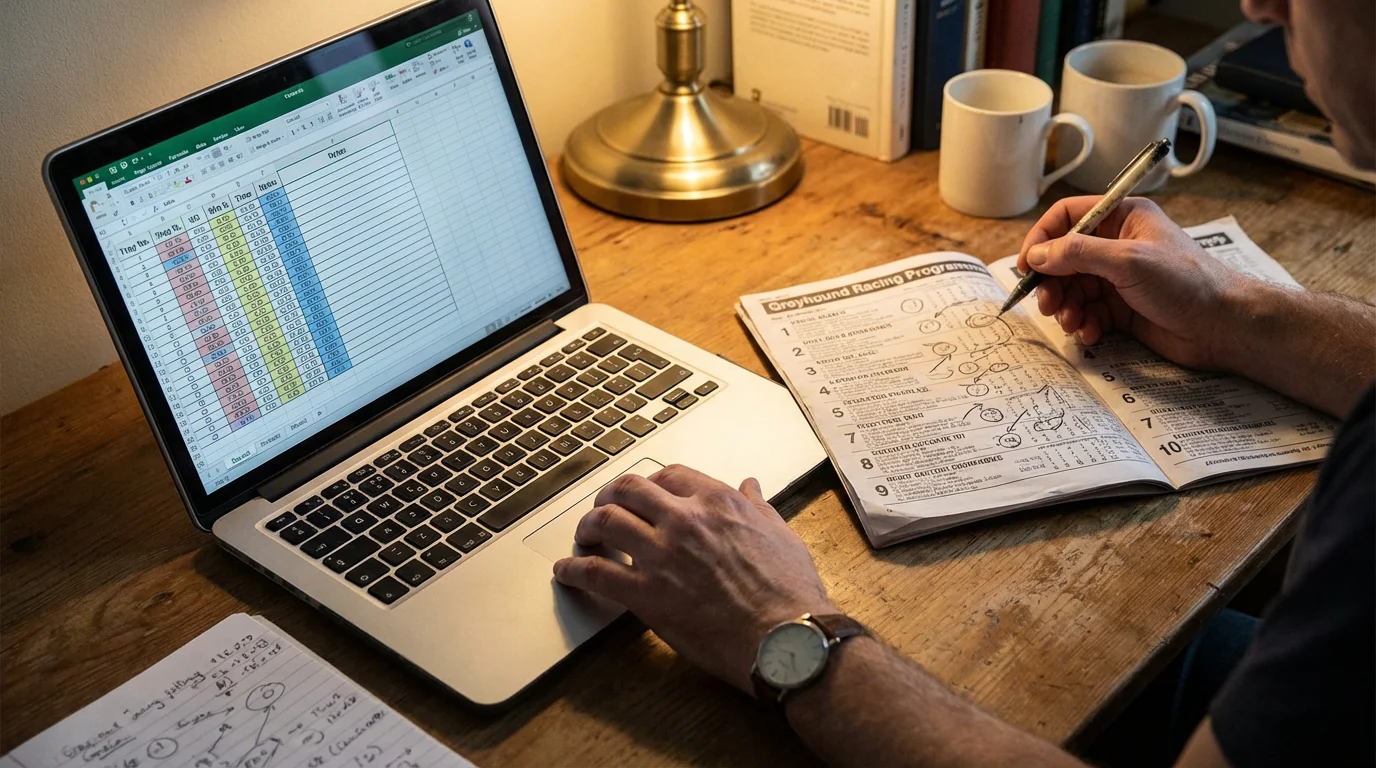
Trap Bias Analysis: Which Traps Win Most at Each Track?
Every track has a statistical lean towards certain trap numbers. At some venues, Trap 1 wins disproportionately often because the track geometry gives inside runners a short path to the first bend. At others, Trap 6 outperforms because a wide galloping circuit lets outside runners avoid crowding. This is not conjecture — it is measurable data, and most form services publish trap statistics by track and distance.
The analytical question is not simply "which trap wins most?" but "is that trap bias already priced into the odds?" If Trap 1 wins 22% of races at a particular track over 480 metres, but the market consistently prices Trap 1 dogs as though they win 25% of the time, there is no value in backing them blind. The bias only creates a betting opportunity when the bookmaker has underpriced a trap advantage — typically when a dog has strong form but is not the favourite, and happens to be drawn in the track's dominant trap.
Bias also shifts. After heavy rain, some tracks see inside traps lose their advantage as water pools on the rail. At other venues, the opposite occurs. Tracking how weather interacts with trap statistics at your chosen track is one of the highest-value forms of analysis available to a greyhound punter.
How Weather and Going Conditions Change the Race
Wet weather affects greyhound racing more than most punters account for. A rain-soaked track changes the surface grip, slows overall times, and can shift the balance between traps. On some tracks, wet conditions make the inside rail slippery, which neutralises the advantage normally held by Trap 1 runners. On others, the outside of the track drains faster and gives wide runners better footing.
Heavier dogs tend to handle wet going more effectively. A 34-kilogram dog cutting through soft sand has a different experience to a lighter 28-kilogram animal on the same surface. This is not a universal rule, but it is a pattern worth tracking for your chosen venue. Wind can also play a role, particularly at tracks with exposed home straights. A strong headwind on the run-in slows finishers and can favour dogs that lead from the front and build an unassailable lead before the conditions bite.
Do
- Specialise in one or two tracks and learn their characteristics deeply
- Study trap bias data across thousands of races, not dozens
- Track your profit and loss in a spreadsheet after every bet
- Check going conditions and weather before committing to a selection
- Review market movements in the minutes before the off
Don't
- Chase losses by increasing stakes after a bad run
- Bet on every race at a meeting because you are watching
- Ignore late market drifts — they carry information
- Follow tipsters without understanding their methodology
- Assume yesterday's system works forever without review
Understanding Greyhound Odds and Finding Value
The bookmaker's price is not truth — it is an opinion with a margin baked in. Every set of odds on a greyhound race represents the bookmaker's assessment of each dog's probability of winning, adjusted to ensure a profit regardless of the outcome. The gap between that assessment and reality is where the serious punter operates.
Greyhound odds are typically displayed in fractional format in the UK. A dog at 5/1 implies the bookmaker believes it has roughly a 16.7% chance of winning. A dog at evens implies a 50% chance. To convert any fractional odds to an implied probability, divide 1 by the decimal equivalent. For 5/1, that is 1 divided by 6.0, giving 16.7%. Sum up all the implied probabilities in a six-dog race and you will get a number above 100% — the excess is the bookmaker's overround, or margin. A typical greyhound market runs at 115% to 125% overround, meaning the bookmaker takes between 15% and 25% in theoretical margin across the race.
Starting price and early price are the two timing options. The starting price is the final odds showing at the moment the traps open. The early price is whatever the bookmaker offers before that — sometimes hours in advance, sometimes just minutes. The movement between early price and SP carries information. A dog whose price shortens from 4/1 to 5/2 is attracting money, which may reflect inside knowledge, strong trial form, or simply public confidence. A dog whose price drifts from 3/1 to 5/1 is losing support, and that drift is often a warning.
Betfair Starting Price offers a third option. The BSP is calculated from the Betfair Exchange market at the moment the race starts and often differs from the bookmaker SP. Because the Exchange operates without a bookmaker margin, BSP can be higher than the traditional starting price — though Betfair deducts a commission on winning bets. For punters who consistently back winners at short prices, the commission eats into margins. For punters who target bigger-priced selections, BSP frequently offers better value than anything available with a traditional bookmaker.
Finding value means identifying dogs whose true probability of winning is higher than the odds suggest. This is easier to state than to execute. It requires you to form your own assessment of each dog's chance — based on form, trap draw, going conditions, and trainer patterns — before looking at the market price. If your assessment says a dog has a 25% chance and the bookmaker is offering 5/1 (a 16.7% implied chance), you have found a value bet. If the bookmaker offers 2/1 on the same dog (33% implied chance), the value sits elsewhere in the race.
In 2024, favourites in UK graded greyhound racing won just 35.67% of the time on average. The track-to-track range ran from 31.6% at Kinsley to 42% at The Valley — a gap wide enough to reshape your entire approach depending on where you bet.
That favourite win rate is the single most important number for context. It means that in nearly two out of every three graded races, a dog other than the market leader wins. The bookmaker prices the favourite to reflect this, but the subtlety lies in the distribution of non-favourite winners. At tracks with a low favourite strike rate, the results are more dispersed, which means forecast and tricast bets can carry better value. At tracks where the favourite wins more often, straight win bets on shorter-priced dogs become the more efficient approach.
Interactive Tool
Favourite Win Rate Gap, and Dog Weight Comparison
Calculate the exact gap between the lowest and highest track favourite-win rates, and quantify the weight difference the guide only describes qualitatively.
Gap Between Tracks
-
-
Lowest Track
-
Highest Track
-
Ratio
-
What this guide leaves as two figures with no gap stated: "The track-to-track range ran from 31.6% at Kinsley to 42% at The Valley — a gap wide enough to reshape your entire approach." The actual size of that gap is never calculated — it's 10.4 percentage points, meaning The Valley favourites win 1.33x as often as Kinsley favourites.
Weight Difference
-
-
Heavier Dog
-
Lighter Dog
-
Percent Heavier
-
What this guide describes without quantifying: "A 34-kilogram dog cutting through soft sand has a different experience to a lighter 28-kilogram animal on the same surface." The difference is never stated in numbers — it's 6kg, meaning the heavier dog carries 21.4% more mass (1.21x) than the lighter one.
Using Yesterday's Results to Bet Smarter Tomorrow
Yesterday's results are not history — they are tomorrow's form data. Every finishing position, every comment code, every sectional time from last night's card feeds directly into the race cards for the next meeting. The punter who reviews results the morning after a race has a head start on the one who waits until five minutes before the next off.
Start with the beaten favourites. A favourite that lost is not automatically a value bet next time, but the reason it lost matters. If it was bumped at the first bend and checked at the second — Bmp1, Ck2 in the form abbreviations — it was likely better than the finishing position suggests. If it led for most of the race and was caught in the closing stages, it may have been drawn on the wrong side or may simply lack the stamina for that distance. Each scenario produces a different response for the next time you see that dog on a card.
Improving dogs are another product of results analysis. A dog that has moved from sixth to fourth to second across its last three runs is clearly going the right way. The question is whether the improvement will continue or whether it has peaked. Context helps: if the improving runs have come against progressively stronger opposition, the trend is more meaningful than if the dog has simply been dropped to a lower grade.
Track speed is the other dimension. If the overall race times at a particular track have been faster than usual over the past week, it suggests the going is quick — which favours front-runners and early-pace dogs. If times have slowed, the surface may be holding moisture, which shifts the advantage. Comparing last night's times to the track standard over the same distance gives you a snapshot of current conditions that the bookmaker may not have fully priced in by the time the next market opens.

Pre-bet checklist
- Check the last three runs: finishing positions, form comments, and trap draws
- Compare sectional times to the track standard for the distance
- Review the trainer's recent form and record at this specific track
- Assess tonight's going conditions against the dog's known preferences
- Confirm there is no significant late market drift before placing the bet
Where UK Punters Bet on Greyhounds
The bookmaker you choose shapes the entire experience — from the odds you get to the races you can watch. UK greyhound betting is spread across four main channels: online bookmakers, high-street betting shops, the Betfair Exchange, and the trackside Tote. Each operates differently and suits different types of punter.
Online bookmakers offer the widest access. Most major operators cover every GBGB-licensed meeting, with odds available from early morning on the day of racing. Live streaming is one of the key differentiators between platforms. Some bookmakers offer free streams of every UK and Irish greyhound race to customers with a funded account or a minimum qualifying bet. This is not a luxury — being able to watch races in real time feeds directly into form analysis, running style assessment, and the kind of visual knowledge that no data table can fully replicate.
The Betfair Exchange operates on a different model. Rather than betting against a bookmaker, you bet against other punters. This means you can both back and lay selections. The absence of a bookmaker margin means the available odds are often larger than the SP offered by traditional operators, though Betfair charges a commission on winning bets. For greyhound racing, Exchange liquidity is lower than for horse racing — particularly in graded races at smaller tracks — but it is usually sufficient for modest stakes at the bigger meetings.
The Tote operates pool betting at UK stadiums. Dividends are determined by the total pool rather than by a bookmaker's assessment, which occasionally produces larger payouts on less-fancied runners — but you will not know your return until after the race. Some tracks also offer jackpot pools that require you to pick the winner of multiple consecutive races.
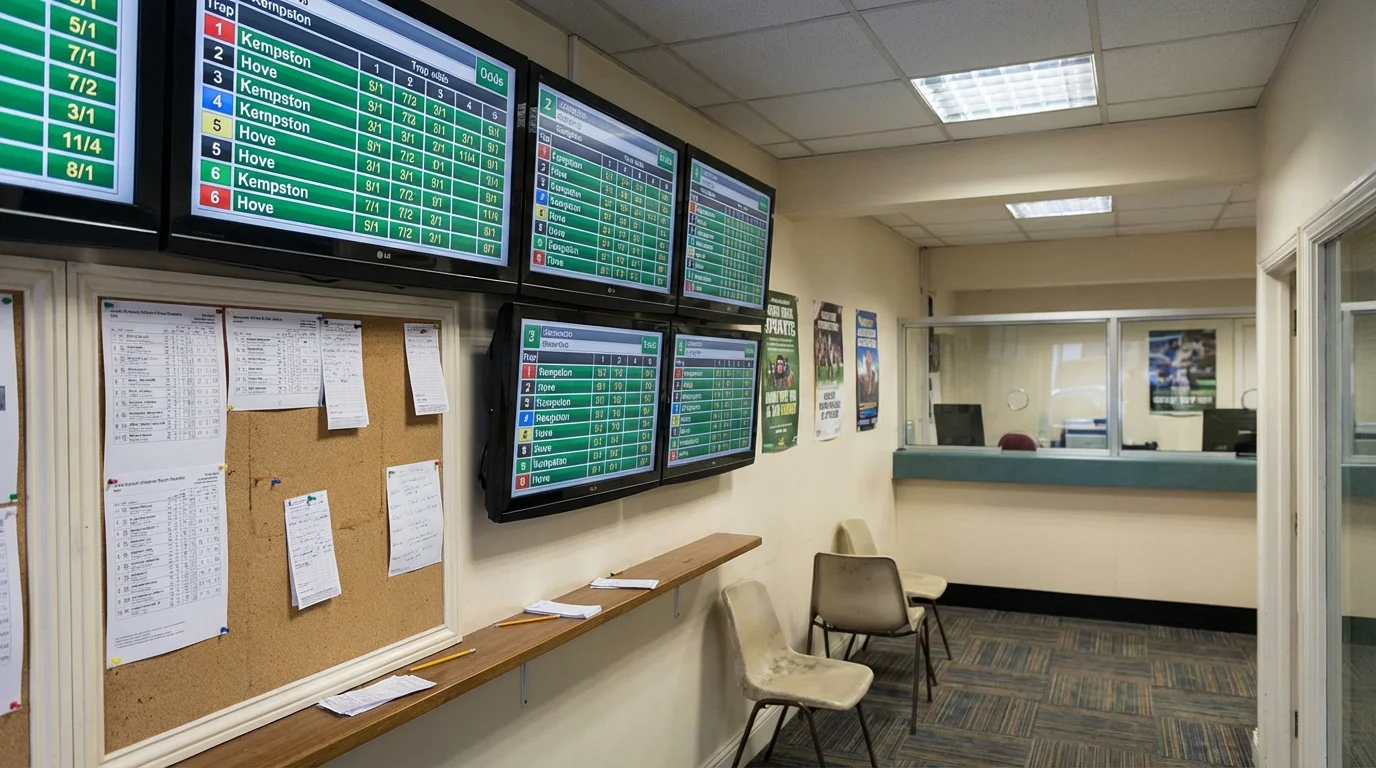
High-street shops remain relevant for punters who prefer the atmosphere and immediacy of an in-person bet. Odds boards are displayed on screens, and SIS or Sky Sports coverage is broadcast throughout the day. The practical difference is that high-street prices are not always as competitive as online prices, and BOG is typically not available over the counter.
Important
Always check whether your bookmaker offers Best Odds Guaranteed on greyhounds. Not all do — and among those that do, the terms vary. Some offer BOG on all UK races, others limit it to specific meetings or times of day. Over the course of a season, the difference in payouts from BOG alone can add several percentage points to your return on investment.
Keeping Greyhound Betting in Check
The fastest way to ruin a good thing is to bet more than you can afford to lose. This is true of all gambling, but greyhound racing presents a specific amplifier: frequency. Licensed meetings run six days a week across the UK, with many tracks hosting afternoon and evening cards. On a busy day, there can be over a hundred races to bet on. That volume creates a persistent temptation to keep staking, and it is the single greatest risk factor for a greyhound punter.
Bankroll management is the first line of defence. Set a fixed amount that you are prepared to lose entirely over a defined period — a week, a month, a season — and do not exceed it under any circumstances. Divide that bankroll into unit stakes, typically between 1% and 5% of the total per bet. If your bankroll is £500, a 2% unit is £10. When the bankroll drops below your starting point, reduce the unit proportionally. When it grows, you can increase it. The discipline is in the system, not in the feeling after a loss.
Session limits matter as much as financial limits. Betting across twelve races in an evening, especially when the first few have gone badly, is a recipe for poor decisions. Set a number of races you will bet on per meeting, and stick to it. If none of the races meet your criteria, do not bet at all. The ability to sit out a meeting is one of the most profitable skills in greyhound betting, even though it pays nothing directly.
Every licensed UK bookmaker is required by the UK Gambling Commission to offer self-exclusion tools, deposit limits, cooling-off periods, and reality checks. The Commission's 2026 regulatory framework continues to tighten affordability checks and operator obligations, making it easier for punters to set hard limits on their accounts. Use these tools. If you recognise patterns in your behaviour — chasing losses, betting with money intended for other things, hiding the extent of your gambling from people close to you — seek support. GamCare provides free, confidential advice via their helpline and online chat. BeGambleAware offers resources, assessments, and referrals.
Greyhound Betting: Common Questions Answered
How does greyhound betting work in the UK?
UK greyhound betting operates through licensed bookmakers, the Betfair Exchange, and on-course Tote pools. Six dogs race from numbered traps, each wearing a colour-coded blanket. You can bet before the race at a fixed price or at starting price. The main bet types are win, each way, forecast (predicting first and second in order), and tricast (first, second and third). Odds are displayed in fractional format and reflect each dog's assessed chance of winning, with a bookmaker margin built in. All UK greyhound racing is regulated by the GBGB, and all betting operators must hold a UK Gambling Commission licence.
What is the best trap position in greyhound racing?
There is no single best trap — it depends on the track. At most venues, Trap 1 has a statistical advantage because it provides the shortest route to the first bend, benefiting railers. However, at wider, galloping tracks, Traps 5 and 6 can outperform because outside runners avoid first-bend crowding. Trap bias also shifts with weather conditions and going. The most useful approach is to check the trap statistics for the specific track and distance you are betting on, which are available from form services like Timeform and the Racing Post.
What do forecast and tricast mean in greyhound racing?
A forecast bet requires you to predict which dogs will finish first and second in exact order. A tricast requires the first three in exact order. Both pay out based on a computer-calculated dividend that factors in the starting prices of the placed dogs. You can also bet a reverse forecast (first and second in either order, at double the stake) or a combination forecast/tricast, which covers all permutations among your selected dogs. Combination bets cost more but give you broader coverage. These bets are most valuable in races with a strong favourite and an open second or third place.
The 30-Second Edge
Greyhound racing rewards the punter who does the quiet work before the traps open. The race itself is over in half a minute, but the analysis window stretches across days, weeks, and months of accumulated data. That asymmetry is the sport's defining feature for anyone who takes it seriously.
The 2026 season offers UK greyhound punters more data access than at any previous point. Sectional times, trap bias statistics, and trainer records are available from multiple free and paid services. The English Greyhound Derby, the St Leger, and the English Oaks continue to anchor the open-race calendar, drawing the strongest fields and the deepest betting markets of the year. The tools to analyse these events are no longer reserved for professionals — but the discipline to use them consistently still separates the profitable from the hopeful.
Mastery in this sport does not come from watching more races or backing more dogs. It comes from narrowing your focus, building expertise in one track's conditions, and developing a process that you trust enough to follow even when a losing run makes you want to abandon it. The greyhounds do not care about your confidence or your frustration. They run the same way regardless. Your edge, if you build one, lives in the gap between what the market thinks and what the data shows — and it compounds only if you are disciplined enough to let it.
