
Match Betting: Your Dog Doesn’t Have to Win
Standard greyhound betting asks a simple question: which dog wins the race? Match betting asks a different one: which of these two dogs finishes ahead of the other? The race result does not matter. The winner of the race does not matter. All that matters is the relative finishing position of two specific dogs. If your selection finishes third and the other dog finishes fifth, you win the match bet — even though neither dog was anywhere near first place.
This reframing changes the analytical task entirely. In a win market, you need to identify the single best dog in a six-runner field. In a match bet, you need to determine which of two dogs is more likely to outperform the other. The rest of the field is irrelevant except insofar as it affects the running of your two selections. This narrower question is sometimes easier to answer with confidence than the broader win question, and when it is, match betting offers a more efficient way to express your opinion.
Match betting is a niche market in greyhound racing — not every bookmaker offers it, and not every meeting has match betting options. But where it is available, it provides opportunities that the standard win market cannot replicate, particularly in races where you have a strong comparative view of two dogs but low confidence about which one will actually win the race outright.
How Head-to-Head Greyhound Markets Work
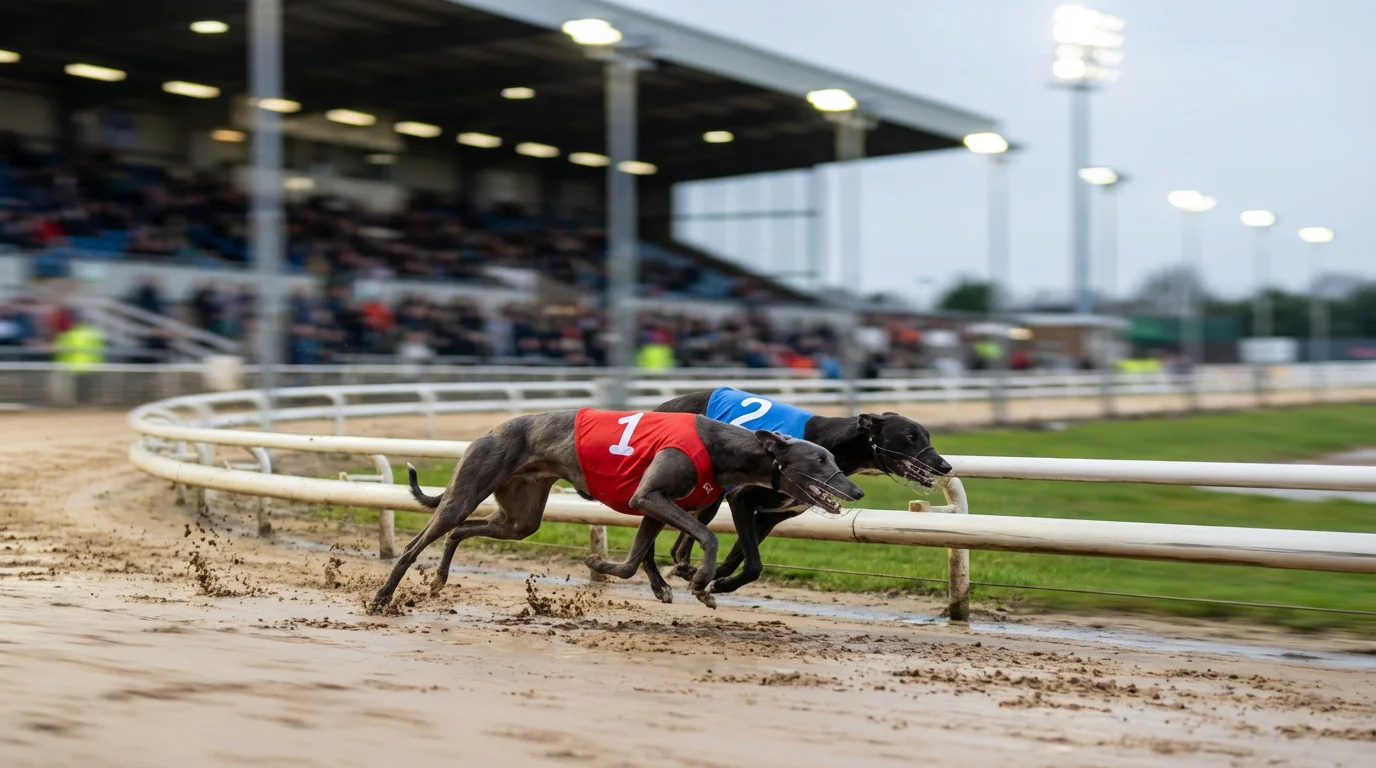
A match bet presents two dogs from the same race and asks you to pick which one finishes higher. The bookmaker sets odds on each dog relative to the other, creating a two-outcome market. If Dog A is priced at 4/6 and Dog B at evens, the bookmaker considers Dog A more likely to finish ahead but is offering close to even odds on Dog B for punters who disagree.
The market is settled purely on finishing positions. If Dog A finishes second and Dog B finishes fourth, Dog A wins the match. If Dog A finishes sixth and Dog B finishes fifth, Dog B wins. If both dogs fail to finish — which is rare but can occur if one is withdrawn at the start — the bet is typically voided. If one dog is withdrawn before the race, the match bet is usually voided as well, since the comparison cannot take place.
The odds in a match market reflect the bookmaker’s assessment of relative probability, with a margin applied. In a fair market with no margin, a 50/50 match would be priced at even money on both sides. In practice, the bookmaker shaves both prices to build in their profit — so a genuine 50/50 match might be priced at 5/6 on each dog. The margin in match betting markets tends to be tighter than in outright win markets because the market is simpler and the bookmaker’s risk is more contained.
One important detail: match bets are independent of the race outcome. The race still happens with all six dogs, and the other four runners interact with your two selections in ways that can affect the result. If Dog A gets bumped at the first bend by a third dog and loses ground, while Dog B has a clear run, the external interference has decided the match. This element of randomness is the same as in any greyhound bet — the difference is that the match market isolates the comparison while the win market requires you to beat the entire field.
Dead heats between the two matched dogs are rare in greyhound racing — the photo finish technology is precise enough to separate most close finishes — but where they occur, the standard dead heat rules apply and the payout is halved.
Where to Find Match Betting Markets
Match betting markets for greyhound racing are not universally available across all UK bookmakers. The larger online operators are most likely to offer them, particularly for featured meetings and higher-grade races where the betting interest is strongest. Some bookmakers offer match markets as a standard part of their greyhound product; others provide them selectively for specific meetings or on request.
The best approach is to check the greyhound section of your bookmaker’s site before each meeting and look for markets labelled “head-to-head,” “match betting,” or “dog vs dog.” These markets are typically listed separately from the main win market and may appear under a tab or dropdown menu on the race page. If your primary bookmaker does not offer match betting on dogs, it is worth checking one or two alternatives — the market availability varies by operator, and a bookmaker that does not offer matches on one meeting might offer them on another.
Betfair Exchange provides another route to match betting, though it works differently. On the exchange, you can construct your own match bet by backing one dog and laying another, effectively creating a head-to-head position without a formal match market. This approach requires more steps and exposes you to exchange commission, but it gives you the flexibility to create a match between any two dogs in any race, regardless of whether the bookmaker has offered a formal market.
The availability of match markets tends to increase around major events — the English Greyhound Derby heats, the St Leger, and other open-race competitions attract broader betting interest and incentivise bookmakers to offer more exotic market types, including matches.
When Match Bets Offer Better Value Than Win Markets
Match betting is not inherently better than win betting — it is better in specific situations. The key is recognising when your analytical edge sits in the comparison between two dogs rather than in identifying the outright winner.
The clearest case for a match bet is when you have a strong view on the relative quality of two dogs but low confidence in either to win the race. If a race features a dominant favourite that you expect to win, and you believe Dog B will finish ahead of Dog C but behind the favourite, the win market offers you nothing useful — Dog B at 5/1 is not a good bet if you expect it to finish second. The match market between Dog B and Dog C, however, directly expresses your view and gives you a bet that can win even if neither dog finishes first.
Another strong scenario is when two dogs have contrasting running styles and one is better suited to the specific race conditions. If a confirmed railer is drawn in trap one and its matched opponent is a wide runner drawn in trap five at a track where inside traps dominate, the form says the railer has a structural advantage. That advantage might not be enough to win the race — the favourite might still be a class above — but it might be enough to consistently finish ahead of the wide runner. The match market lets you bet on that specific comparison without needing to predict the broader race outcome.
Grade differences between the two matched dogs are another indicator. If one dog has recently been racing at a higher grade than the other, its form lines are recorded against stronger opposition. Even if both dogs are now in the same race, the dog with higher-grade experience has been tested at a level the other has not. In a match market, that quality differential is often underpriced because the bookmaker’s odds reflect the dogs’ chances relative to each other in this specific race, not their broader quality profiles.
The discipline to avoid in match betting is using it as a default when you cannot decide on a win bet. If you have no clear view on which of two dogs will finish ahead of the other, the match bet is as much of a guess as any other bet — it just looks different. The analytical requirement is the same: a form-based reason to believe one dog will outperform the other, not just a vague preference or a coin flip.
Reframe the Question: Who Beats Who?
The win market trains punters to think in absolute terms: which is the best dog? Match betting encourages relative thinking: which dog outperforms which other dog? That shift in perspective is subtle but powerful. You do not need to know who wins the race. You need to know who beats a specific opponent. And sometimes — often, in fact — the second question is easier to answer than the first.
A race with a strong favourite and five competitive also-rans might be unapproachable in the win market because you cannot separate the favourite from the rest at the odds available. But within those five also-rans, you might have a clear view that one will outperform another based on trap draw, running style, or grade history. The match market makes that view actionable. The win market does not.
Match betting is not for every race and not for every punter. It is a specialist tool for situations where your analytical edge lies in comparison rather than identification. When those situations arise — and they arise more often than most punters notice — the match market provides a direct, efficient way to turn your comparative view into a bet.
Find more betting guides at greyhoundresultsyester.
Also read our greyhound lay betting strategy.
