

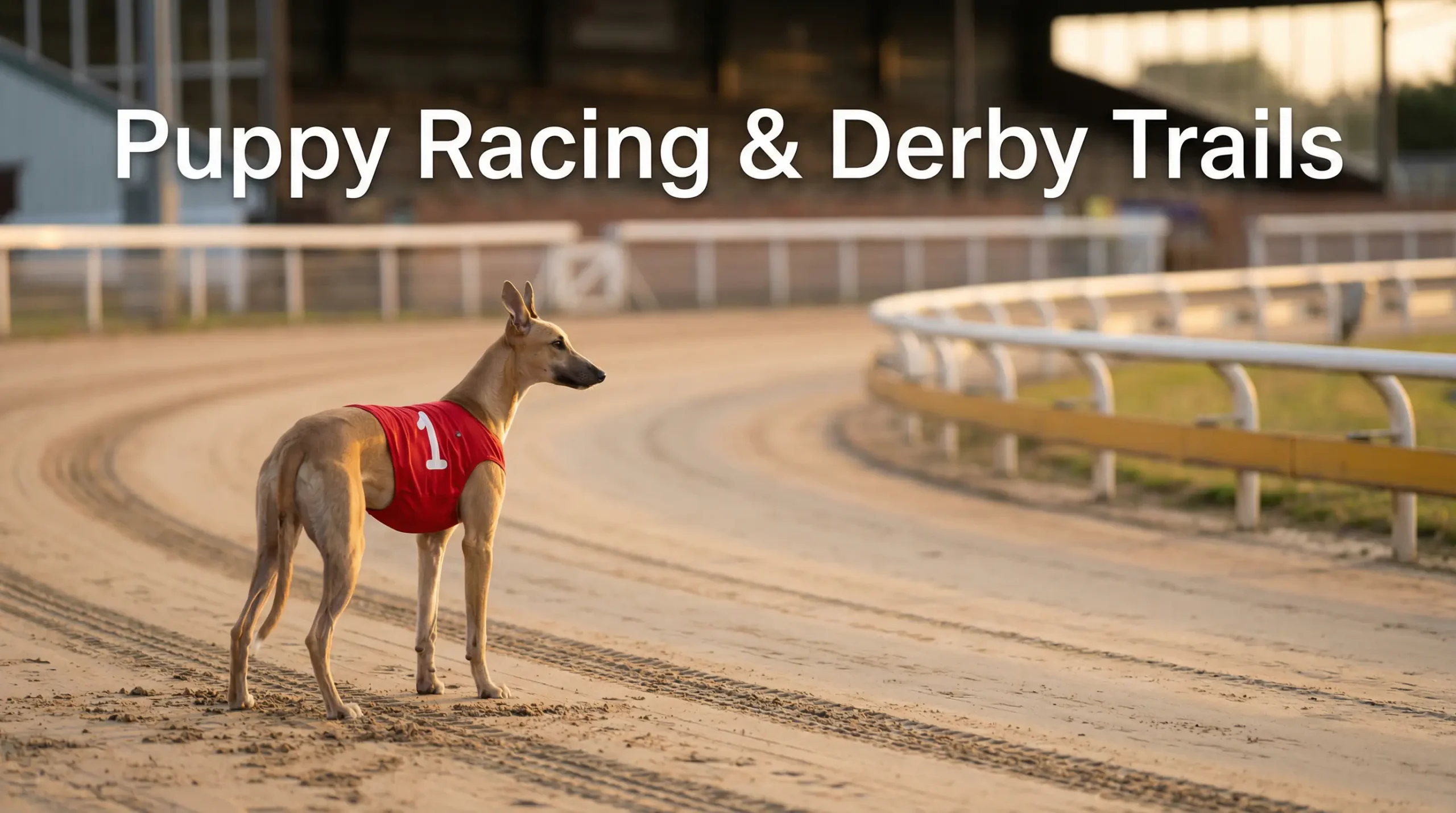
Young Dogs, High Potential, Thin Form Books
Puppy racing is where the next generation of greyhound talent emerges — and where the form book is at its thinnest. A puppy entering its first competitive races might have two or three trial runs on record, no grading history, and a running style that has not yet been tested against genuine opposition. For punters, this creates a specific challenge: the raw material for analysis is limited, the variance in performance is higher than in established graded racing, and the market prices reflect uncertainty more than they reflect form.
That uncertainty also creates opportunity. The dogs that progress through puppy racing into derby trails and eventually into open-class competition are, by definition, the best of their generation. Identifying them early — before the market has enough data to price them correctly — is one of the most rewarding angles in greyhound betting. It requires patience, a willingness to work with incomplete information, and an understanding of how the puppy and derby trial system operates.
Puppy racing is not a niche sideshow. It feeds directly into the most prestigious events in UK greyhound racing. The dogs that contest the English Greyhound Derby, the St Leger, and other major opens all came through the puppy ranks. Understanding the pathway from first trial to classic final gives you a structural advantage when those dogs arrive at the stages where the betting interest — and the betting money — is heaviest.
Age Rules and the Puppy Racing Calendar
In UK greyhound racing, a dog is classified as a puppy until it reaches a specific age — twenty-four months under GBGB rules, though definitions can vary slightly between competitions. The puppy designation is not cosmetic; it determines which races the dog is eligible for and ensures that young, developing dogs race against peers of similar age and experience rather than against fully mature open-class runners.
Puppies enter the racing system through a structured process. A young greyhound begins with trials at a licensed track, where the racing manager assesses its speed, running style, and temperament. Based on the trial performance, the dog is either accepted onto the track’s racing programme or sent back for further development. Those that are accepted are initially placed in puppy or novice races — graded events restricted to dogs with limited race experience.
The puppy racing calendar runs throughout the year, with the major puppy competitions aligned to the broader greyhound calendar. Many tracks host their own puppy stakes — named competitions with qualifying rounds and finals — that serve as proving grounds for young talent. These local puppy stakes are the first competitive tests that separate promising dogs from average ones, and the results are the earliest form data available on the next generation.
The timing of a puppy’s introduction to racing matters. Dogs that begin racing earlier in the season accumulate more form data and more race experience, which gives them an advantage in later competitions where they face dogs that started later. Trainers manage this carefully — introducing a dog too early, before it is physically or mentally ready, can damage its confidence and set back its development. The best trainers time the introduction to coincide with the dog reaching physical maturity and competitive readiness, which produces a smoother transition into regular racing.
Breeding data plays a larger role in puppy racing than in established graded events, because the form book is so thin. A puppy from a dam and sire line known for producing fast dogs over middle distances carries a genetic expectation that provides at least a starting point for assessment. Breeding is not destiny — a well-bred puppy can fail and an unfashionably bred one can excel — but in the absence of race form, pedigree is the closest thing to a predictor that exists.
How Derby Trails Work: From Trials to Final
Derby trails are the qualifying pathway for the English Greyhound Derby and other major open competitions. The process begins months before the final, with trials and early-round heats at multiple tracks across the country. Dogs earn their place in later rounds through performance — winning or running well enough to merit progression.
The typical derby trail structure starts with open trials, where any eligible dog can enter. These trials are timed, and the fastest qualifiers advance to the first round of heats. The heats are competitive races — usually six-dog fields run over the derby distance — and the winners plus the fastest losers progress to the next stage. The process narrows the field at each stage: from hundreds of initial trialists to perhaps sixty or eighty first-round heat runners, then to the quarter-finals, semi-finals, and finally the six-dog final.
Each round of the trail produces more form data. A dog’s trial time tells you its raw speed. Its first-round heat performance tells you how it handles competition. By the time a dog reaches the quarter-finals, you have multiple competitive race runs to analyse — trap behaviour, running style under pressure, ability to handle different draw positions, and performance relative to the other qualifiers. This accumulating body of evidence makes the later stages of a derby trail among the most analytically rich races on the greyhound calendar.
The semi-finals are typically the most informative stage for betting purposes. The field has been whittled down to the best eighteen dogs (three semi-finals of six), and each dog has a full run of competitive form recorded against opposition that has itself been tested through the earlier rounds. By this stage, the market has substantial data to work with, which compresses the odds and reduces the scope for uninformed pricing. The value in derby betting is often found earlier in the trail — at the quarter-final or first-round stage — where the market has less data and the pricing is looser.
The final itself is the showpiece event. Six dogs, one race, and a prize that dwarfs anything else in UK greyhound racing. By this point, the form is comprehensive and the market is well informed. Profitable betting at the final stage requires either a strong comparative view that differs from the consensus or a position taken at longer odds during an earlier round and carried forward.
Betting on Puppies: What Form Data You Can Trust
The core challenge of betting on puppy racing is calibrating your confidence. The form data exists — puppies do have race records once they have competed — but the data is less reliable as a predictor than it is for established dogs. Puppies are still developing physically and learning competitively. A puppy that loses its first three races might improve dramatically over the following month as it matures. A puppy that wins its first two might plateau once it meets stronger opposition.
Trial times are useful as a baseline but should not be overweighted. A fast trial time shows raw speed in isolation. It does not show how the dog handles traffic on the first bend, how it responds to being bumped, or whether it maintains its speed over the full race distance when other dogs are pushing it. The transition from trials to competitive racing is where many promising puppies discover their limitations — and where a few exceed their trial expectations.
The most reliable data points in puppy form are improvement trends rather than individual results. A puppy whose race times have improved across three consecutive runs is on an upward trajectory — its body is developing, its racing education is progressing, and its peak performance may still be ahead. A puppy whose times have stalled or worsened across the same period may have reached its current ceiling, at least for now.
Trainer reputation carries more weight in puppy racing than in established graded events. A trainer with a track record of developing young dogs through the puppy ranks into open competition is more likely to have prepared their puppy correctly — timed the introduction, chosen the right race schedule, and managed the dog’s physical development. Backing puppies from proven development trainers is a heuristic that compensates for the lack of deep form data.
The Best Derby Dogs Are Found Early
The punters who profit from derby betting are not the ones who study the final racecard the night before the race. They are the ones who watched the trials, tracked the early heats, and identified their selections before the market had enough information to price them efficiently. By the time a dog reaches the derby final, every punter in the country has access to the same form, the same times, and the same analysis. The edge has been competed away.
The early rounds are where the edge lives. A dog that catches your eye in its first-round heat — fast, clean through the bends, finishing strongly — might be priced generously in the ante-post market for the outright competition because the broader market has not yet noticed. By the quarter-finals, the price has shortened. By the semis, it is the favourite. The punter who backed it after the first round holds a position at odds that no longer exist.
Following puppy racing and derby trails is a commitment. It requires watching races that most casual punters ignore, recording data that most databases do not prominently feature, and forming opinions on dogs with minimal form. That commitment is also what makes it valuable. The fewer punters who engage seriously with puppy form, the wider the information gap between those who do and the market price that reflects those who do not.
Get more race guides at greyhoundresultsyester.
Also read our major UK greyhound races.
