

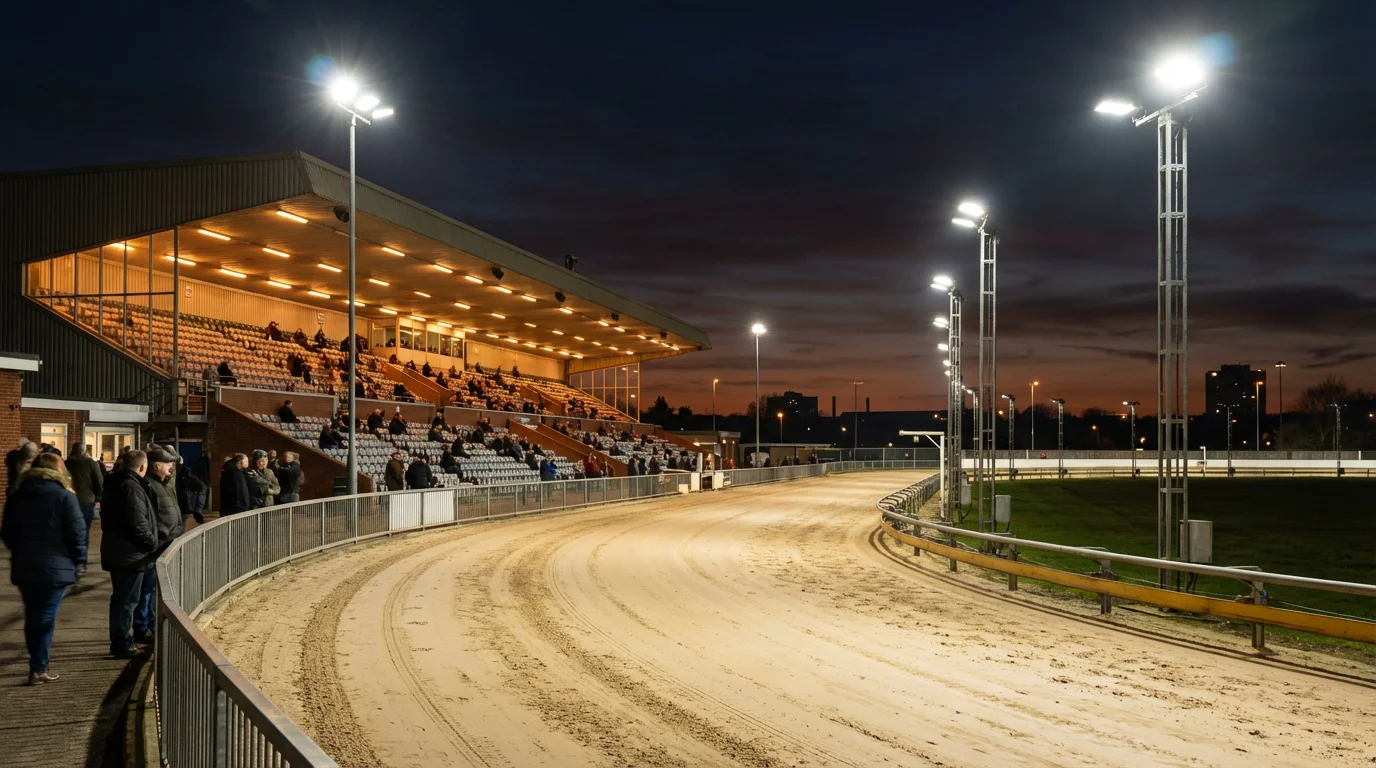
UK Greyhound Racing Runs Nearly Every Day
One of the defining features of UK greyhound racing — and one of its main attractions for punters — is the sheer volume of racing available. Licensed meetings take place six or seven days a week across GBGB-regulated stadiums (currently 18 licensed venues), from morning cards designed to fill the early betting schedule through to evening meetings that run into the night. On a typical weekday, a punter has access to several hundred individual races spread across multiple tracks, distances, and grades. On a busy Saturday, that number increases further.
This density of racing is both an opportunity and a risk. The opportunity is obvious: more races mean more chances to find value, more form data to analyse, and more flexibility in choosing which meetings to focus on. The risk is equally clear: the volume encourages indiscriminate betting, and the punter who tries to cover every race at every track spreads their analysis thin enough to lose its value. Understanding the schedule — knowing which tracks race when, which meetings tend to produce the best form data, and which windows offer the strongest betting opportunities — is a basic piece of infrastructure that disciplined punters build their approach around.
Weekly Schedule: Which Tracks Race When
UK greyhound tracks operate on fixed weekly schedules, with each stadium allocated specific days and time slots by the GBGB and the broadcasting arrangements with SIS. This means the weekly pattern is predictable: once you know which tracks race on which days, you can plan your week in advance, study the relevant cards ahead of time, and focus your attention where it is most useful.
Most tracks race two or three times per week. A typical arrangement might see a stadium hosting meetings on Tuesday evening, Thursday evening, and Saturday afternoon. Others might run Monday, Wednesday, and Friday. The specific days vary by track, and the schedule is published well in advance through the GBGB, bookmakers, and racing data sites. Some stadiums also host additional morning or lunchtime meetings — sometimes called “flapping” or BAGS-funded meetings — that run alongside the main scheduled cards to provide content for betting shops and online operators during quieter daytime hours.
The larger stadiums tend to have the fullest schedules. Tracks with higher throughput of dogs, more grading flexibility, and stronger trainer rosters can sustain more frequent racing without field quality dropping. Smaller stadiums may race twice a week, and their cards may feature smaller fields or more reserve runners being called into action.
For punters who specialise in specific tracks — and specialisation is one of the most commonly recommended strategies for greyhound betting — knowing the schedule is essential for time management. If your track of choice races on Tuesday and Friday evenings, your form study for those meetings can be concentrated on Monday and Thursday, leaving the rest of the week free for other activities or for expanding your coverage to a second track.
Weekends are the busiest period. Saturday afternoon meetings are the flagship events at most stadiums, often featuring the highest-grade races and the strongest fields. Saturday cards tend to attract the most betting activity, which means larger market volumes, tighter odds, and more competitive pricing. For punters who prefer to bet on nights with the deepest markets and the most reliable form, Saturday is the primary target.
Sunday racing is more limited than the rest of the week but still available at several stadiums. Some tracks rest on Sundays entirely, while others run afternoon or evening cards. Midweek racing — Monday through Thursday — fills the bulk of the weekly schedule and provides the highest overall volume of races, though individual meeting sizes may be smaller than the weekend offerings.
The schedule is not completely static. Tracks occasionally reschedule meetings for operational reasons — adverse weather, track maintenance, or major event clashes — and additional meetings are sometimes added around public holidays when betting demand increases. Bank holiday Mondays and the Christmas-to-New Year period typically see expanded schedules across the circuit. Checking the daily schedule through a bookmaker or the GBGB’s own listings before the start of each week is a good habit that takes thirty seconds and prevents you from planning around a meeting that has been moved or cancelled.
Afternoon Meetings vs Evening Cards
The distinction between afternoon and evening meetings is not just about timing — it affects the character of the racing, the quality of the fields, and the betting dynamics. Understanding these differences helps you decide where to concentrate your attention and your stakes.
Afternoon meetings typically begin between 11:00 and 14:00 and are primarily designed to service the betting shop and online markets during daytime hours. These cards tend to feature lower-grade racing than evening meetings, with smaller fields and less depth of form. The dogs racing in afternoon cards are often from the middle or lower tiers of a track’s grading structure, which means the racing is more variable and the form data is less reliable as a predictor. For punters, afternoon cards require extra caution — the edge from form analysis is thinner because the dogs are less consistent.
Evening meetings are the main events. They typically begin between 18:00 and 19:30 and feature the strongest cards, the highest-grade races, and the most complete fields. The dogs that appear on evening cards tend to be the better performers at each track, and the grading is more carefully structured to produce competitive races. For punters, evening meetings offer the deepest form data, the most liquid betting markets, and the most reliable basis for analysis.
The practical implication is straightforward: if you are selective about when you bet — and selectivity is always preferable to volume — evening meetings should be your default focus. Afternoon cards are a supplement, useful for expanding your coverage or for targeting specific opportunities, but the core of your greyhound betting activity should be built around evening racing where the quality and predictability of the product is highest.
Major Annual Events and Open Race Calendar
The UK greyhound calendar includes a series of major open-race events that draw the best dogs from across the country. These are the flagship competitions of the sport, carrying the largest prize funds, the highest-quality fields, and the most media attention. For punters, they represent both the most exciting racing of the year and the most competitive betting markets.
The English Greyhound Derby is the most prestigious event in UK greyhound racing. Run over 500 metres at Towcester, it attracts the top open-class dogs and follows a multi-round format that begins with first-round heats and progresses through quarter-finals and semi-finals before the six-dog final. The format means that by the final, form data on every participant is extensive and publicly available — making it one of the most analysable races of the year.
The St Leger, traditionally run over a staying distance, tests stamina and tactical running in a way that the Derby does not. The Grand National — greyhound racing’s version, not to be confused with the horse racing event — is another major fixture. Each of these events operates on a heats-based qualifying structure, which gives punters weeks of competitive racing to study before the final cards are decided.
Beyond the named classics, individual tracks host their own open-race events and feature competitions throughout the year. These are listed on the GBGB calendar and in racing media, and they often provide racing of a quality that sits between regular graded cards and the national classics. For punters who specialise in a specific track, the local feature events are prime opportunities — you have both the deep track knowledge and the benefit of studying the entries as they work through the qualifying rounds.
Know the Calendar, Plan Your Bets
The volume of UK greyhound racing is a resource, not an obligation. Nobody profits from betting on every race at every track, and the punters who try burn through their analysis time and their bankroll in equal measure. The schedule exists to give you options. Your job is to be selective about which options you take.
Build a weekly routine around the tracks you know best. Check the schedule on Monday, identify the meetings that fall within your area of focus, study those cards with the time and attention they deserve, and let the rest pass. If your form study reveals no strong selections at a given meeting, do not bet. The next meeting is a day or two away — the schedule guarantees that.
The major annual events are worth marking in your calendar months in advance. The qualifying rounds generate weeks of high-quality form that is more informative than almost any regular graded card. Following the heats from the first round gives you an accumulating body of knowledge that sharpens your assessment with each stage, and by the time the final arrives, you are better prepared than any punter who only starts paying attention at the last moment. The schedule is the framework. What you do within it determines the result.
Find more UK racing info at greyhoundresultsyester.
Also explore our stadiums UK.
